Recently, I've been out in the garden beds and have been looking at the condition of my soil. I'm getting ready to put in the spring garden and have been looking at what I have. I have been working to build my soil for the past several years. What I started with was, well, garbage. Not the kind you compost, the kind you add compost to! I bought some of this "garden mix" from a local dirt/rock/soil company. I forget now how many cubic yards of material we brought in, but it was at least 3 truckloads on their dump truck.
They dumped it on the street and we had to wheelbarrow it to the back yard. I was sorely disappointed in the look, texture and feel of it once it got here. It was obviously NOT the same stuff that had been on display at the office when I ordered. It was a 50/50 blend of sand and "organic materials." It was supposed to be a mixture of rice hulls, composted forest products (that's trees, right?) and food processing waste like brewery waste. I think what I got was actually about 75% sand and 25% rice hulls. I couldn't identify or even locate anything else in it. But, I was out of money and didn't really have a choice.
So I've been amending this stuff for years. I've dug in a dozen pickup truck loads of horse manure, bales and bales of straw, the leaves of several years, household scrap waste and my own compost. I think we've produced about 250 gallons of compost in the past three years which translates to about 3 inches of compost over the garden.
Two years ago, I covered one of the beds in wood chips from my friend the arborist. It's that bed I'm most impressed with.
Of the "big 3" beds, the ones that run along the back wall of my yard, I put the chips only on the top one. They are all 3 feet deep and about 75 feet long and they are tiered in three-foot lifts. The bottom one is my workhorse. In that one, since it's the easiest to get to, I grow most of my short-term annuals. Since I can reach this one to work in it from the ground, it is the most manicured of the the three. I have to climb up for the others so they don't get quite as much TLC as this one does.
I mulched this one and the second one with straw over the past several growing seasons. They do really well and the soil is rich and black and smells wonderfully fresh. I get really good production out of these two, even if they are growing corn, a heavy feeder.
The top one is harder to get to, harder to lift the compost to, harder to do anything with. This one I put in about a 6-inch layer of wood chips. It has never been the most productive bed, but it's not bad. While I was up there yesterday digging into the chips to find the soil, I noticed some things that have me pretty excited about this year's gardens.
First, the chips have mellowed to a wonderful, silver color that goes well with the gray cinder block wall behind it. Second, there are only about 3 inches of chips left. Since they don't blow away when we have our wind storms, I know something else did something to them. As I dug into the bed, I found out what that was.
It's compost.
Yep, those silly chips have gone and added about 2 inches of compost to the top of the soil. They have rotted right down to a rich, dark brown loam that looks and smells like premium compost. I like that. I didn't have to turn it, add stuff to it, or add nitrogen to the soil to cover the nitrogen loss required to decompose the wood. I'm assuming the local bacteria took the necessary nitrogen from the atmosphere to accomplish that.
And worms. There are earthworms and roly-poly's and other tiny livestock at work and living there. Those are good signs. Since we don't have naturally occurring earthworms in the desert, I'm wondering where they came from, but I'm not complaining. Earthworms are ALWAYS a good sight.
The soil is also moist down to about 8 inches. Not wet, but moist. This is particularly interesting to me since I've not watered this bed for about 3 months. (That's forever in desert time.) The lower beds are moist, too, but not quite as deep and I water those since I've got things growing in them. Another benefit of using wood chips as a mulch.
I'm pretty excited to find these things in this bed. They are all unexpected and all great. Since I'm putting in giant sunflowers along the back, several rows of several varieties of corn in the middle and squash and cucumbers interspersed with nasturtiums along the front, I'm very pleased to find the soil in such good condition.
Here's looking forward to a good spring growing season.
What's the status of your garden this year?
Wednesday, January 14, 2015


Wednesday, November 19, 2014
An Apple A Day
I really like apples and this year has been a great year for us with apples.
First, a few weeks ago, I wrote a blog about spending a weekend with my friend and harvesting apples from his two trees. They were gracious enough to give my wife and me more than half of the haul from which we made the most wonderful applesauce and bottled it. Since that weekend, the bottles of applesauce have been steadily disappearing from my pantry shelves, which is precisely what is supposed to happen.
Second, on a recent trip to Utah, we stopped at a fruit seller and bought another box of apples. Not nearly as tasty (although they are very good) because I think that doing all that work yourself adds to the savor of the flavor.
Since we didn't want to make applesauce out of those apples, I decided to get out the old food dehydrator and see how the apple chips would turn out. This post deals with that process.
When we harvested the apples this summer, we stopped by a home production and storage store (best way to describe it) and made a couple of purchases, one of which was this apple peeler/corer/slicer tool. We had one for a while when I was a very young boy and I've always wanted one. It was an easy task to convince my wife of the necessity of this piece of old technology so we bought it.
The actual process of peeling, coring and slicing for drying an apple is all accomplished by setting up the tool correctly. First, you have to make sure that the prongs that hold the apple are aligned with the corer. Second, you make sure that the peeler blade is adjusted to the proper width. (I'll show why in a second.) Third, fasten the device securely on the counter. The lever on the suction cup base is simple and fast.
After washing your apples, press the holding prongs into the center of the apple. Push them firmly into the apple parallel to the core.

Once it's seated properly, it looks like this.
 Now, you turn the crank and the apple rotates and advances toward the business end where it is peeled and cored and sliced.

The peel begins to come off in a long, narrow ribbon as the blade makes contact. If you have aligned the blade properly, the peel comes off in a continuous strip and you don't leave any on the apple. Too narrow a cut and you get this:
 The blade will skip a row and you will have a striped apple.
You can see how the slicer blade has now been engaged. It happens after the peel is removed. Continue turning the crank until the apple has been completely sliced. As it is being sliced, it is also being cored. You won't see this happening until you are done slicing. When you are done, simply slide the apple off the core.
The core slides off the prongs easily and the core and the peel get put into the bowl for the compost pile.


Continue until you have a bunch done and ready for the dehydrator. Here's what the process looks like as it's being done. It is surprizingly fast.

If you find that you have a bruise like the one on the right, you can simply cut that part out. It will dry, but it won't taste the same as the rest of the apple.
Next, since the apple is actually sliced in a continuous spiral, you need to make a single cut down the side. This will release each layer as a single slice.

Next, I lay the apples out on the trays of my dehydrator. Apples will turn a little brown as they are dried. Some folks don't like that. It makes no difference to the taste and I don't mind the color. If you want white slices, dip you apples into an acid bath like lemon juice in water or pineapple juice. That will keep the apple from oxydizing as it dries.

Once all of the trays are full, I stack them on the base which has the heating coil. I put on the top and plug it into the wall. 24 to 48 hours later, depending on humidity, my apple slices are dried and done. It may take longer in your area or shorter depending on the quality of your dehydrator and your humidity. I have a cheap, non-fan-forced food dryer that I got for free. It's slow but it works. My humidity hovers around 10% so that really isn't a factor for me.
Once during the drying process, I rotate the trays around so that the top ones get to be near the heating coil and the whole pile dries evenly and they get done at about the same time.
When they are done, which I test by tasting them, I cool them a bit and place them into locking plastic bags. I place these in my freezer for two or three days. This insures that if some nasty insect has laid an egg in them that it won't hatch. (That may be an old wives' tale but I'm not taking any chances.)
You can eat these right out of the bag. You can soak them and put them into things you cook. My mother used to actually make apple pies out of dried apple slices. She would simmer them in water with sugar and cinnamon until they were re-hydrated and then bake them in the pie. You can crumble them up and put them in your oatmeal, cookie dough, batter-breads, or sprinkle them on salads. I love them when hiking.
It's a great way to store some of that summer goodness for later.
First, a few weeks ago, I wrote a blog about spending a weekend with my friend and harvesting apples from his two trees. They were gracious enough to give my wife and me more than half of the haul from which we made the most wonderful applesauce and bottled it. Since that weekend, the bottles of applesauce have been steadily disappearing from my pantry shelves, which is precisely what is supposed to happen.
Second, on a recent trip to Utah, we stopped at a fruit seller and bought another box of apples. Not nearly as tasty (although they are very good) because I think that doing all that work yourself adds to the savor of the flavor.
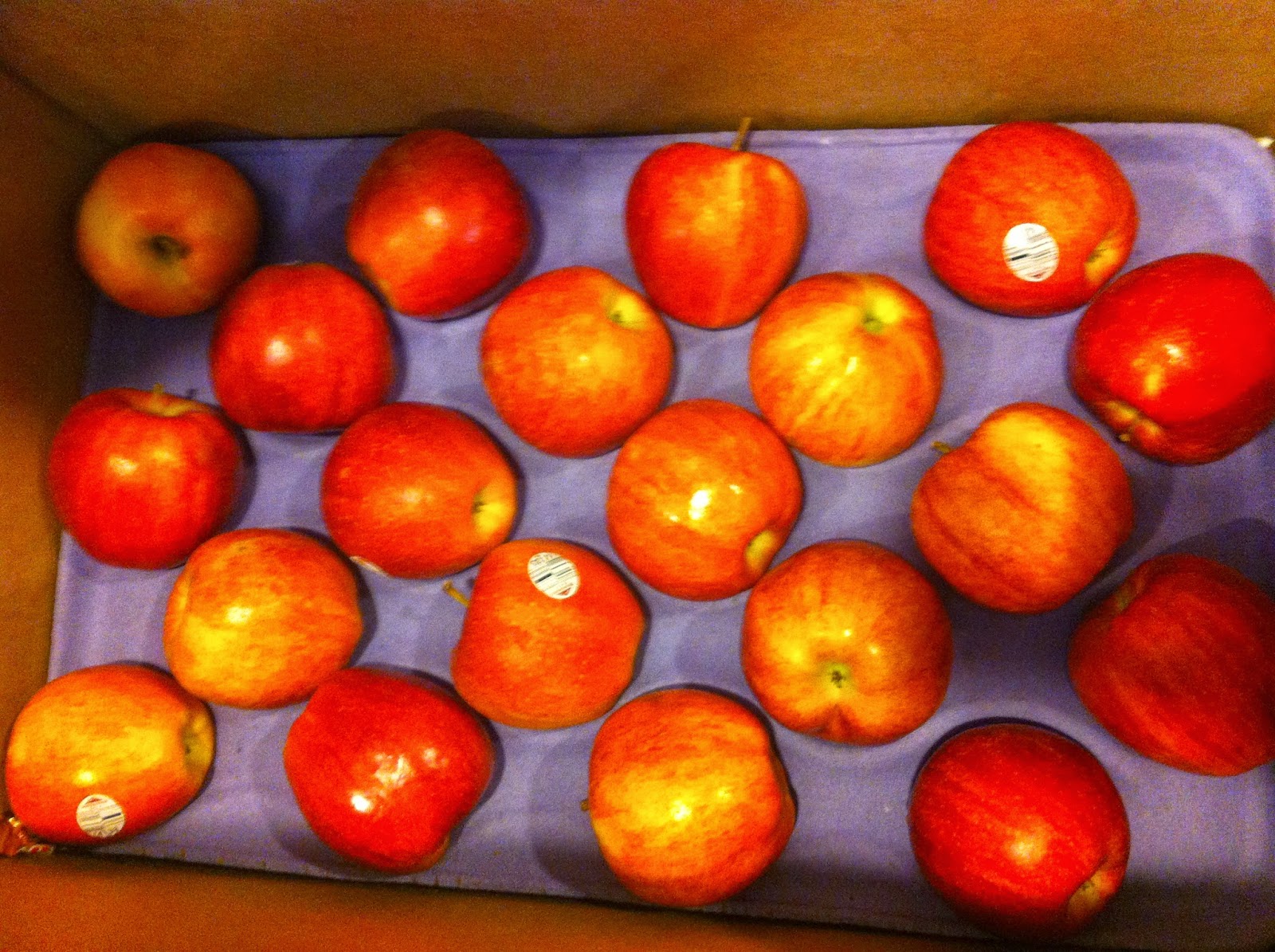 |
| Seven or eight layers of wonderful apples all resting on dividers that are surprisingly effective at protecting the apples from bruising and damage. Popular songs notwithstanding, one bad apple WILL spoil the whole bunch. |
When we harvested the apples this summer, we stopped by a home production and storage store (best way to describe it) and made a couple of purchases, one of which was this apple peeler/corer/slicer tool. We had one for a while when I was a very young boy and I've always wanted one. It was an easy task to convince my wife of the necessity of this piece of old technology so we bought it.
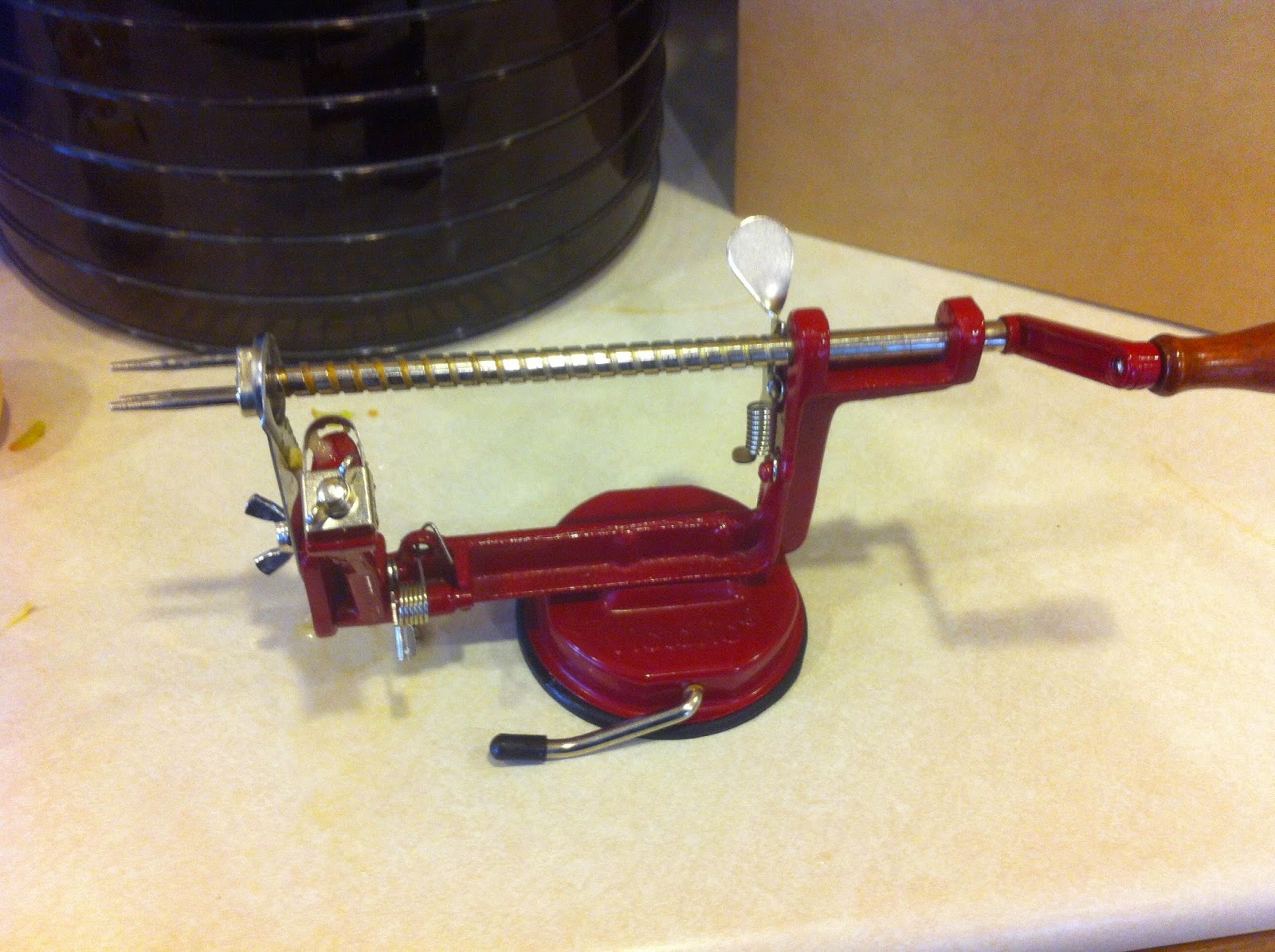 |
| Simple, effective, adjustable design that hasn't changed in well over 150 years, except for the suction-cup base that holds it to the counter-top. They didn't have that in 1860. |
After washing your apples, press the holding prongs into the center of the apple. Push them firmly into the apple parallel to the core.
Once it's seated properly, it looks like this.
The peel begins to come off in a long, narrow ribbon as the blade makes contact. If you have aligned the blade properly, the peel comes off in a continuous strip and you don't leave any on the apple. Too narrow a cut and you get this:
You can see how the slicer blade has now been engaged. It happens after the peel is removed. Continue turning the crank until the apple has been completely sliced. As it is being sliced, it is also being cored. You won't see this happening until you are done slicing. When you are done, simply slide the apple off the core.
 |
| This picture is actually upside down. |
The core slides off the prongs easily and the core and the peel get put into the bowl for the compost pile.
Continue until you have a bunch done and ready for the dehydrator. Here's what the process looks like as it's being done. It is surprizingly fast.
If you find that you have a bruise like the one on the right, you can simply cut that part out. It will dry, but it won't taste the same as the rest of the apple.
Next, since the apple is actually sliced in a continuous spiral, you need to make a single cut down the side. This will release each layer as a single slice.
Next, I lay the apples out on the trays of my dehydrator. Apples will turn a little brown as they are dried. Some folks don't like that. It makes no difference to the taste and I don't mind the color. If you want white slices, dip you apples into an acid bath like lemon juice in water or pineapple juice. That will keep the apple from oxydizing as it dries.
 |
| My trays are slotted and have a central columnar hole. I'm assuming that's for even flow of air as it is heated, picks up moisture and rises out the top of the dryer. |
Once all of the trays are full, I stack them on the base which has the heating coil. I put on the top and plug it into the wall. 24 to 48 hours later, depending on humidity, my apple slices are dried and done. It may take longer in your area or shorter depending on the quality of your dehydrator and your humidity. I have a cheap, non-fan-forced food dryer that I got for free. It's slow but it works. My humidity hovers around 10% so that really isn't a factor for me.
 |
| Filled trays on the heating base and with the top in place. The top has an adjustable vent so I can regulate the amount of airflow that rises out of the unit. I usually keep it wide open for fruit. |
Once during the drying process, I rotate the trays around so that the top ones get to be near the heating coil and the whole pile dries evenly and they get done at about the same time.
When they are done, which I test by tasting them, I cool them a bit and place them into locking plastic bags. I place these in my freezer for two or three days. This insures that if some nasty insect has laid an egg in them that it won't hatch. (That may be an old wives' tale but I'm not taking any chances.)
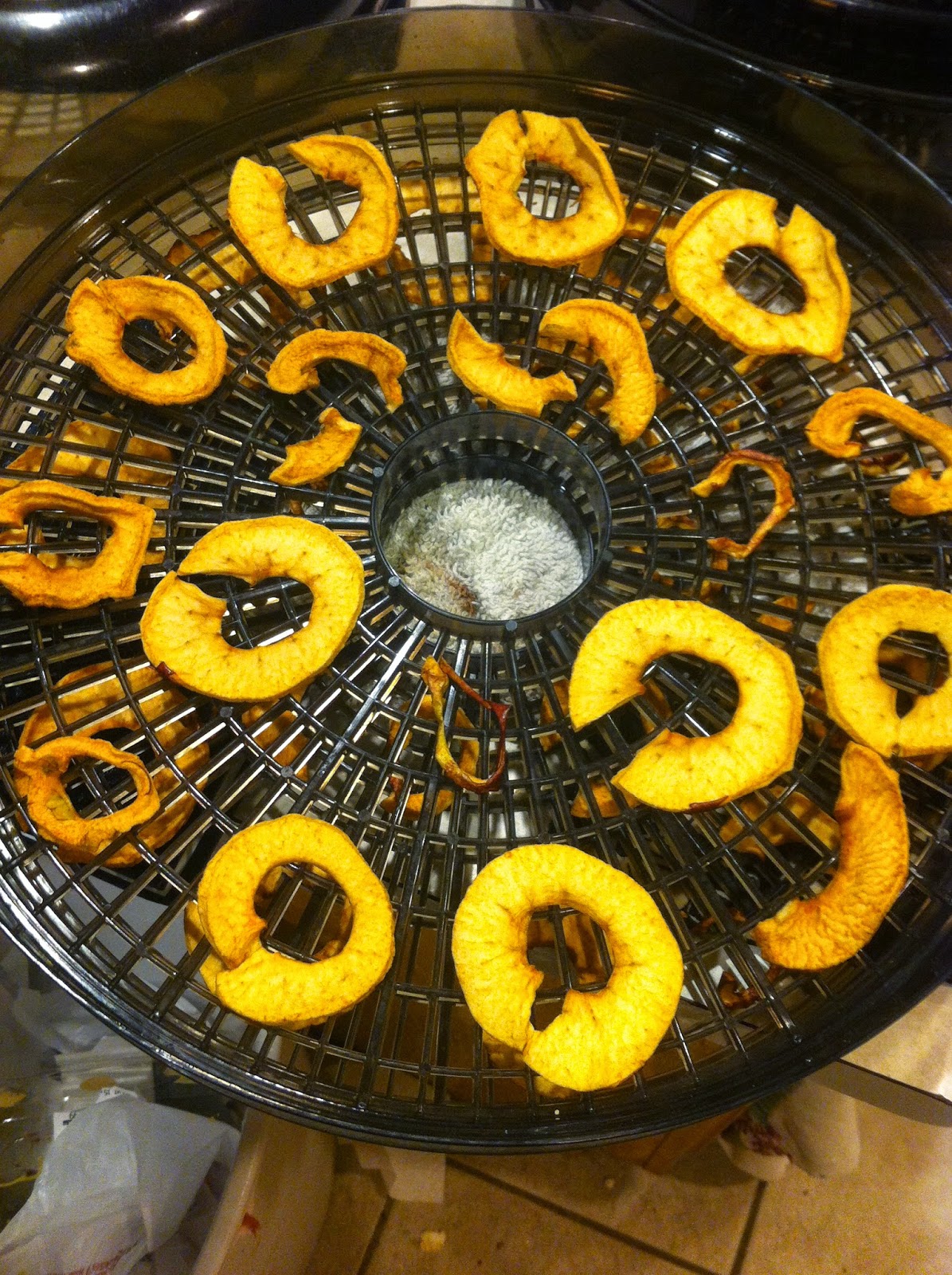 |
| Dried and ready for packaging. |
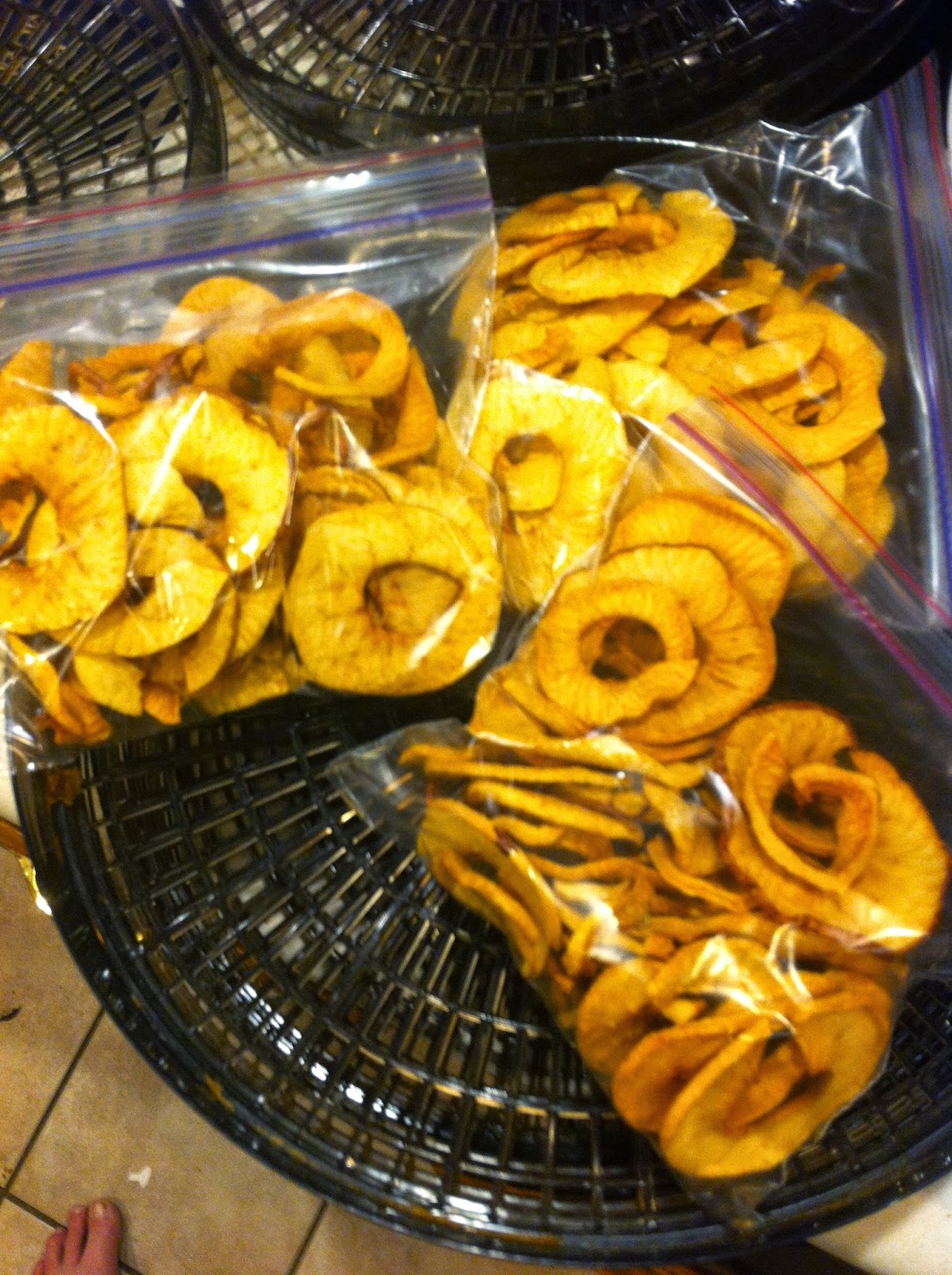 |
| Packed and ready for munching. |
You can eat these right out of the bag. You can soak them and put them into things you cook. My mother used to actually make apple pies out of dried apple slices. She would simmer them in water with sugar and cinnamon until they were re-hydrated and then bake them in the pie. You can crumble them up and put them in your oatmeal, cookie dough, batter-breads, or sprinkle them on salads. I love them when hiking.
It's a great way to store some of that summer goodness for later.
Monday, November 17, 2014
Am I a Back-To-Eden Gardener? Yes. And No.
If you are not familiar with the concept of Back to Eden gardening, I suggest you watch the film by the same name. You can find it on Vimeo.com ( http://vimeo.com/28055108 ) where you can watch the whole thing for free. I suggest you do. It's an easy watch and will convince you of the science and the philosophy it contains, if not the religion.
This is an idea that was developed and promulgated by Paul Gautschi (gout-shee) as his personal journey from struggling gardener to casual garden prophet. The film describes in his words and in the words of others who know him and others who are doing the same thing how to garden the same way that Adam did (or God did, if you will) in the Garden of Eden. Hence the name of the movie.
Here is his basic premise: nothing in nature is left bare. Nature covers the animals as well as the ground in something. If you look at an untouched primeval forest, the ground is covered with the leaves and needles and plant debris. This layer of mulch is what feeds the soil and the plants as well as what holds the moisture in for the plants and the other organisms who live there. In this process of leaf dropping, decay and incorporation into the soil, the soil is nourished and grows. This in turn nourishes and grows the plants which continue the cycle.
Adding animals only adds another layer to the system. The animals take from the plants and provide their own wastes which in turn add to the mulch layer and so on.
Paul's description of this is heavily laden with Biblical verses and examples. If you have a problem with that, you'll miss some great insight. If you don't have a problem with that, it will all make sense.
His mulch of choice is to use the waste stream of the tree trimmers and arborists in the area. They take the trimmings and grind them up, leaves, twigs, sticks, branches and trunks, and he uses that to mulch his garden beds. Add compost before the mulch layer and your weeding problems, fertilizing problems and watering problems will be all but eliminated. Sounds too good to be true, right? That's what I thought.
So I did the Stealth Farmer thing and tried it for myself.
If you've been a reader of this blog for a while, you will know that I am a HUGE fan of mulching. I mulch with straw, have mulched with hay, leaves, cardboard, newspaper, grass clippings and even (*gasp!*) plastic sheeting. (I don't use that junk any more. Way, way too much work.) I have to mulch; it's the only way I can afford to water my garden. So it wasn't a stretch for me to grasp the concept of woody mulch. I have a friend who is a tree trimmer and asked him to dump a load of his grindings on my driveway one evening. He was happy to do it as he has to pay the landfill to take his stuff normally. This saved us both money.
I noticed that the pieces of mulch were fairly uniform in size and shape. I also noticed that it was incredibly lightweight. A whole wheelbarrow full and mounded felt like an empty wheelbarrow. The transfer to the back yard went really quickly, except for the fact that there was SO MUCH. I had no idea.
Landscaping here in the desert is very monotonous. Scrape the land flat, stick a few cacti or spindly desert plants in, cover the whole area in gravel of a particular color and you're done. I still have a section of my front yard that has that stuff. So I removed half of the rocks and covered it with about 4" of wood chips. I wasn't hopeful there, the dirt underneath was as hard as concrete.
That was over a year ago. I noticed a few things right away. First, I could reduce the amount of water that my shrubs needed. The soil was still very moist two or three days later. So I was able to reduce my watering by 75%. That was a big cost savings right away.
I also noticed that the plants didn't wilt between watering during the hot parts of the summer. They just seemed to ignore the heat.
One year after putting it down, I moved some of it from the area in my front yard and tried to stick in a shovel. Where it had been concrete, I could now push the blade of the shovel in at least 4" without standing on the shovel. And this is with only what rainfall we have had in that time, which isn't much.
Another thing I noticed is that during the windy parts of the year, which is those months with an "R" in their names, my straw mulch would often need to be readjusted or replaced. The wood chips, however, didn't move. And they don't weigh anything which is really weird. They just stay put.
On the areas where I watered from the top, the wood was very noticeably decayed on the bottom. As much as a full inch to an inch and a half have decayed into the soil. On the areas where I watered from underneath (soaker hose), there was even more decay. That means that I have been putting organic material back into the soil while I've been saving money on water and while my plants have been sailing through the summer heat.
I have also noticed that in the area in front, you can stand on the mulch in your bare feet in the summer just fine. You cannot stand on the rocks on the other part. You'll burn your feet and bruise them, too. In the evening, after the sun has gone down, the mulched areas are cooler than the rock areas. There seems to be no "heat island effect" there which makes sense since there are no rocks to absorb the sun's heat all day and re-radiate it back throughout the evening.
About the garden, it's a mixed bag. I noticed that the seedlings had a harder time poking up through the wood mulch than they did through the straw mulch. Either that or all of the varieties of seed and plants I planted in the wood-mulched areas had half the germination rate of the same packets of seed in the straw-mulched areas. Not likely.
I noticed that transplanted seedlings into the wood-mulched areas did noticeably better than their straw-mulched companions. They seemed to get a head start in the growth process. They also suffered much, much less from heat stress during the hottest days.
All told, I won't direct-seed in the wood-mulched areas. I will transplant into those areas. If I can ever get my city to allow me to have chickens, I'll do what Paul does and run everything through them first. But I will continue to mulch with the wood chips AND the straw. I agree with the concepts and even some of his religious reasons, too. So much so that I spanked out $15 and bought a DVD of the movie. You should, too.
So am I a Back to Eden gardener? Yes. And no.
 |
| This is the screen that you'll see when you go to Vimeo.com and search for Back to Eden. You can watch the whole thing for free. If you learn something from the movie, please buy a copy. It'll make you feel better about yourself. |
 |
| Here is Paul Gautschi in a screen grab from the movie. No, he's not parting the Red Sea. Yes, he is standing in his garden. Those are well-pruned and maintained fruit trees in the background. |
Adding animals only adds another layer to the system. The animals take from the plants and provide their own wastes which in turn add to the mulch layer and so on.
Paul's description of this is heavily laden with Biblical verses and examples. If you have a problem with that, you'll miss some great insight. If you don't have a problem with that, it will all make sense.
 |
| He uses chickens as a compost factory. They consume all the excess he is able to grow in his garden and make the most wonderful compost. Plus, he gets eggs. |
So I did the Stealth Farmer thing and tried it for myself.
If you've been a reader of this blog for a while, you will know that I am a HUGE fan of mulching. I mulch with straw, have mulched with hay, leaves, cardboard, newspaper, grass clippings and even (*gasp!*) plastic sheeting. (I don't use that junk any more. Way, way too much work.) I have to mulch; it's the only way I can afford to water my garden. So it wasn't a stretch for me to grasp the concept of woody mulch. I have a friend who is a tree trimmer and asked him to dump a load of his grindings on my driveway one evening. He was happy to do it as he has to pay the landfill to take his stuff normally. This saved us both money.
I noticed that the pieces of mulch were fairly uniform in size and shape. I also noticed that it was incredibly lightweight. A whole wheelbarrow full and mounded felt like an empty wheelbarrow. The transfer to the back yard went really quickly, except for the fact that there was SO MUCH. I had no idea.
Landscaping here in the desert is very monotonous. Scrape the land flat, stick a few cacti or spindly desert plants in, cover the whole area in gravel of a particular color and you're done. I still have a section of my front yard that has that stuff. So I removed half of the rocks and covered it with about 4" of wood chips. I wasn't hopeful there, the dirt underneath was as hard as concrete.
That was over a year ago. I noticed a few things right away. First, I could reduce the amount of water that my shrubs needed. The soil was still very moist two or three days later. So I was able to reduce my watering by 75%. That was a big cost savings right away.
I also noticed that the plants didn't wilt between watering during the hot parts of the summer. They just seemed to ignore the heat.
One year after putting it down, I moved some of it from the area in my front yard and tried to stick in a shovel. Where it had been concrete, I could now push the blade of the shovel in at least 4" without standing on the shovel. And this is with only what rainfall we have had in that time, which isn't much.
Another thing I noticed is that during the windy parts of the year, which is those months with an "R" in their names, my straw mulch would often need to be readjusted or replaced. The wood chips, however, didn't move. And they don't weigh anything which is really weird. They just stay put.
On the areas where I watered from the top, the wood was very noticeably decayed on the bottom. As much as a full inch to an inch and a half have decayed into the soil. On the areas where I watered from underneath (soaker hose), there was even more decay. That means that I have been putting organic material back into the soil while I've been saving money on water and while my plants have been sailing through the summer heat.
 |
| Paul screens his compost. I do, too. He uses a 1/4" screen. I do, too. That makes me feel good. |
About the garden, it's a mixed bag. I noticed that the seedlings had a harder time poking up through the wood mulch than they did through the straw mulch. Either that or all of the varieties of seed and plants I planted in the wood-mulched areas had half the germination rate of the same packets of seed in the straw-mulched areas. Not likely.
I noticed that transplanted seedlings into the wood-mulched areas did noticeably better than their straw-mulched companions. They seemed to get a head start in the growth process. They also suffered much, much less from heat stress during the hottest days.
All told, I won't direct-seed in the wood-mulched areas. I will transplant into those areas. If I can ever get my city to allow me to have chickens, I'll do what Paul does and run everything through them first. But I will continue to mulch with the wood chips AND the straw. I agree with the concepts and even some of his religious reasons, too. So much so that I spanked out $15 and bought a DVD of the movie. You should, too.
So am I a Back to Eden gardener? Yes. And no.
Thursday, November 13, 2014
Some Updates and Some Projects
It's mid-November here in Las Vegas, Nevada. There have been wispy clouds for a couple of weeks, but no precipitation. We have wonderful sunsets and sunrises here. The colors are brilliant, intense and ever-changing.
It's starting to feel like fall a bit. Some of the leaves are beginning to turn other-than-green and some are beginning to fall. My peach trees are turning their vibrant yellow. My raywood ash trees turn a deep vermilion just prior to dropping. I'm keeping my eye on what I hope to be a source of leaves for my compost pile. They are just starting to have brown edges. I have to watch these closely because I don't own those and I have to get them before their professional landscapers vacuum them up and send them to the landfill. (Such a waste!)
The temperatures here are a bit above normal. We are usually in the mid-50's to lower 60's but have been holding in the mid- to upper-70's for several weeks. My garden loves it. I keep planting my "fall" crops and they keep sprouting and growing. It won't last forever, though.
This weekend I'll be building and installing my row covers. I'll do a post on those after they are in place. I'm making some sections of low tunnels that I can cover my beds but still work them. I'm hoping they'll help keep the dadgum dog out of the beds. She is really an irritant.
My plant spacers worked better than I had hoped. I was just hoping to be able to space my seeds and plants evenly in the beds. This was accomplished, but I have the added and unexpected benefit of having very orderly beds. The visual impact of this is quite appealing. Also, I have discovered that it is immediately obvious if one of the seeds didn't sprout. There is an obvious hole in the pattern and I can spot it and plant another in it's place right away. (I can also determine exactly how many plants I have lost to the dadgum dog and her digging! Grrrr!) But the beds look good and very orderly.
For some upcoming projects I will be re-doing the spacers to a staggered pattern that will allow about 5% more plants in the same space. The inter-plant spacing will be the same, I will just base it on a triangle instead of a square.
As I mentioned, I'll be building and installing my low-tunnel-like row covers this weekend.
I have also designed and will be building two projects for this winter, if it ever comes, for use in the garage. The first is a small greenhouse-type rack on which I will be growing microgreens. This is a rack that will have shelves spaced far enough apart so that each will be able to get sufficient sunlight when I open the garage door and move it into the light. My garage faces south and gets wonderful light all winter long. I'll even be using that for seed starting in the spring.
The second is a similar rack but it will be electrified with some fluorescent lights. This will be able to be adapted to my seed starting and microgreens no matter the sun. I won't have to open the garage for that one. Both will be covered with clear plastic. These are projects that I have wanted to do for several years but have never gotten around to doing. This is the year.
I'm also going to build some steps to use in my garden. My beds are three feet wide, but each one is three feet above the previous one. (Or three feet below, depending on your orientation.) Terraces are great to grow on, but can be tough to jump up and down from. These steps will help. I've drafted the plans and now have to find some 2"x6" boards I can scrounge and re-purpose. I won't buy new boards. that's just not Stealthy.
My first book is essentially finished and I'm having a few people read through it. They are not gardeners so I'm looking for their opinion on how it reads and feels. I'm thinking of selling it as a PDF file for about $5. We'll see. I can have it printed for about $9 a copy, which is not bad, so I might have it both ways.
On to winter. It's expected to be on a Thursday this year. I think the third one in January. Then Spring will slam into us and before you know it, sweet corn season! Can't wait.
 |
| My apricot tree starting to turn. |
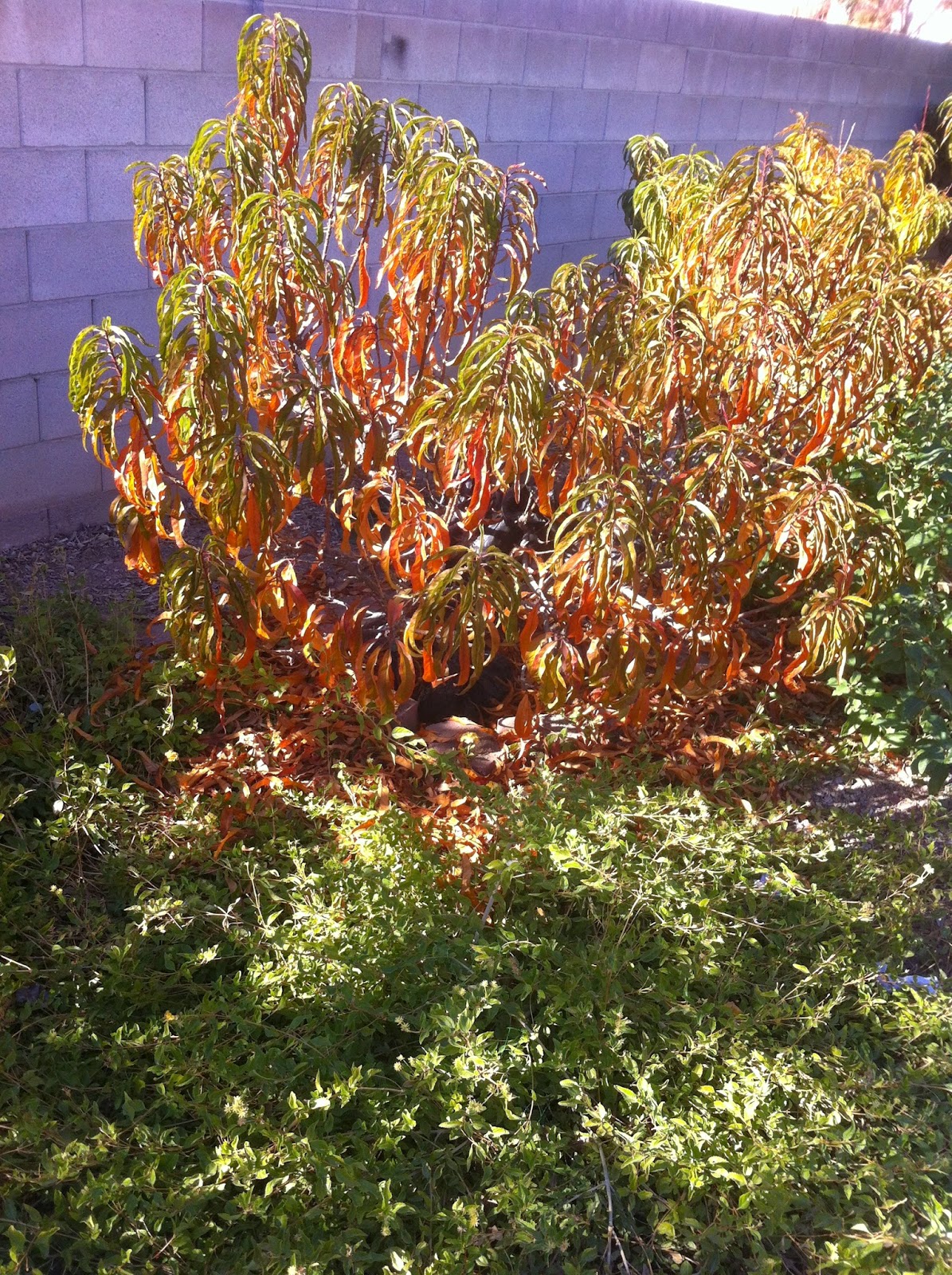 |
| My dwarf peach trees in full yellow-to-brown-to-bare mode. |
It's starting to feel like fall a bit. Some of the leaves are beginning to turn other-than-green and some are beginning to fall. My peach trees are turning their vibrant yellow. My raywood ash trees turn a deep vermilion just prior to dropping. I'm keeping my eye on what I hope to be a source of leaves for my compost pile. They are just starting to have brown edges. I have to watch these closely because I don't own those and I have to get them before their professional landscapers vacuum them up and send them to the landfill. (Such a waste!)
 |
| My raywood ash trees with a hint of vermilion at the top. These two trees drop at least a cubic yard of leaves. Love it! |
This weekend I'll be building and installing my row covers. I'll do a post on those after they are in place. I'm making some sections of low tunnels that I can cover my beds but still work them. I'm hoping they'll help keep the dadgum dog out of the beds. She is really an irritant.
My plant spacers worked better than I had hoped. I was just hoping to be able to space my seeds and plants evenly in the beds. This was accomplished, but I have the added and unexpected benefit of having very orderly beds. The visual impact of this is quite appealing. Also, I have discovered that it is immediately obvious if one of the seeds didn't sprout. There is an obvious hole in the pattern and I can spot it and plant another in it's place right away. (I can also determine exactly how many plants I have lost to the dadgum dog and her digging! Grrrr!) But the beds look good and very orderly.
 |
| You can see the evenly-spaced garlic pushing up through the straw mulch. This is 10 days after planting. I love the orderliness and the easiness that those plant spacers gave me. Can't wait to improve on it. |
As I mentioned, I'll be building and installing my low-tunnel-like row covers this weekend.
I have also designed and will be building two projects for this winter, if it ever comes, for use in the garage. The first is a small greenhouse-type rack on which I will be growing microgreens. This is a rack that will have shelves spaced far enough apart so that each will be able to get sufficient sunlight when I open the garage door and move it into the light. My garage faces south and gets wonderful light all winter long. I'll even be using that for seed starting in the spring.
 |
| Carrots, planted on Halloween, just poking up through the straw mulch. 10 days after planting. |
 |
| Beets, 10 days after planting. They even taste like beets this early. I love the micro-greens. Why didn't I do this before? |
My first book is essentially finished and I'm having a few people read through it. They are not gardeners so I'm looking for their opinion on how it reads and feels. I'm thinking of selling it as a PDF file for about $5. We'll see. I can have it printed for about $9 a copy, which is not bad, so I might have it both ways.
On to winter. It's expected to be on a Thursday this year. I think the third one in January. Then Spring will slam into us and before you know it, sweet corn season! Can't wait.
Friday, November 7, 2014
Am I a Square-foot Gardener? Yes. And no.
I get asked regularly by my friends if I am a square-foot gardener. They are refering, of course, to Mel Bartholomew's concept and his book of the same name. My answer is both simple and complicated and I usually say yes or no depending on how much time I have to answer the question and how much detail they want.
I tell them that I am if I don't have time to go into detail about the ways that I am not. I usually modify my answer by telling them that I don't use his soil mix, I don't use chemical fertilizers, and I will never put a 1-foot by 1-foot plastic grid in my garden beds. To be a true purist SFGer, you have to have and use those things. So, that's part of why I am not.
I do use his plant spacings. I have found for my self that this is the best part of his concept. The idea is that you ignore the row spacings because you are not planting in rows. If a plant needs to be centered 6 inches from the next one in a row, then it can be centered 6 inches from the next one to the side also. That fits well in a square garden idea.
This idea is not new to Mel, though. It was brought to a high degree of development during the French Intensive Gardeing era in Paris which started in the late 1800's. There, they planted in deep horse manure beds (with horses serving as the primary transportation engine, manure was readily available) and planted closely so that when the plants were mature, their outer leaves touched each other. This does a couple of things. One, it makes the most efficient use of garden space so the maximum number of plants can be grown. Two, it creates a shaded soil and acts like a living mulch so less water is needed. This growing method was introduced to the United States around the 1960's or 70's by Alan Chadwick. Mel's method is an outgrowth of this.
I have been using a square measure with plants evenly spaced along both the length and width of the growing bed. I've recently discovered (see, I'm learning, too!) that if I stagger the rows, I can plant even closer. I'll do a post on that later.
I do grow in raised beds into which I have put my soil. These are permanent structures that we built when we reclaimed a huge berm in my back yard. When we bought the house, the back wall had a ginormous earth berm gowing up to the base of the block wall. It was over twelve feet high and extended into the yard about 20 feet. The lot behind me is 18 feet higher than my lot and rather than have sloping yards, the developer built berms. We, my family and friends, cut this back to 12-feet out from the wall and raised it in 3-foot lifts so I have three, 3-foot by 75-foot terraces that are my garden. Since the native "soil" is nothing more than rock, we hauled out dozens of truckloads of rock and hauled in dozens of yards of "soil." This soil was about a 50/50 split of sand and "organic material," mostly rice hulls. Still crappy, but if you put enough compost into it, you can get stuff to grow.
Where I differ from his plan is easy to see. First, I don't use his Mel's Mix, his formula for blending certain ingredients to create an artificial (in my opinion) soil in which to grow. I use actual dirt into which I add large amounts of compost seveal times a year. I amend my soil, rotate my plantings and mulch like crazy. SFGers don't usually mulch. I can't afford that much water. Living in the desert requires that I mulch or I have to water every single day and twice a day during the summer. By adding so much compost every year, my organic component of my soil is higher than normal and this holds a great deal of water. By mulching, I make sure that the water is available to my plants rather than evaporating into the sky.
Second, I don't use chemical fertilizers. I won't buy them, use them or suggest that others use them. I don't believe that they resemble anything Nature has provided so I avoid them. With that being said, I will spread chemical fertilizer on the grass because the lawn is a hideous monoculture which belongs to my wife because that's what she wants. So, I spread it there and hope that it stays green and lush which makes her happy. If she's happy then I'm happy. And if it takes chemical fertilizers to do it, consider it done. But I won't use them in the garden.
Third, Mel recommends placing a grid of plastic or wood or string in the garden dividing the growing area into 1-foot-square planting spaces. I look at that as a waste of time and materials and a colossal hassle. It might work for some, but it doesn't work for me.
I have built and used a 3-foot square frame with 9, 1-foot squares outlined in heavy cord. I use that tool to help me plant my beds but I don't leave it there. If I put seedlings or transplants in, I know where the squares are and if I plant seeds, I will know soon enough. A permanent grid doesn't make sense to me, especially after the first planting.
So, am I a square-foot gardener? I guess the best answer is, "Sort of."
Now the next question is, "Am I a Back-to-Eden gardener?"
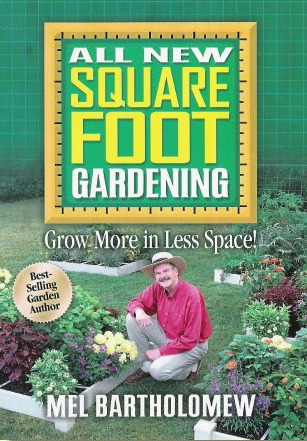 |
| This is the book. Buy it, read it, learn from it. You'll be glad you did. |
I do use his plant spacings. I have found for my self that this is the best part of his concept. The idea is that you ignore the row spacings because you are not planting in rows. If a plant needs to be centered 6 inches from the next one in a row, then it can be centered 6 inches from the next one to the side also. That fits well in a square garden idea.
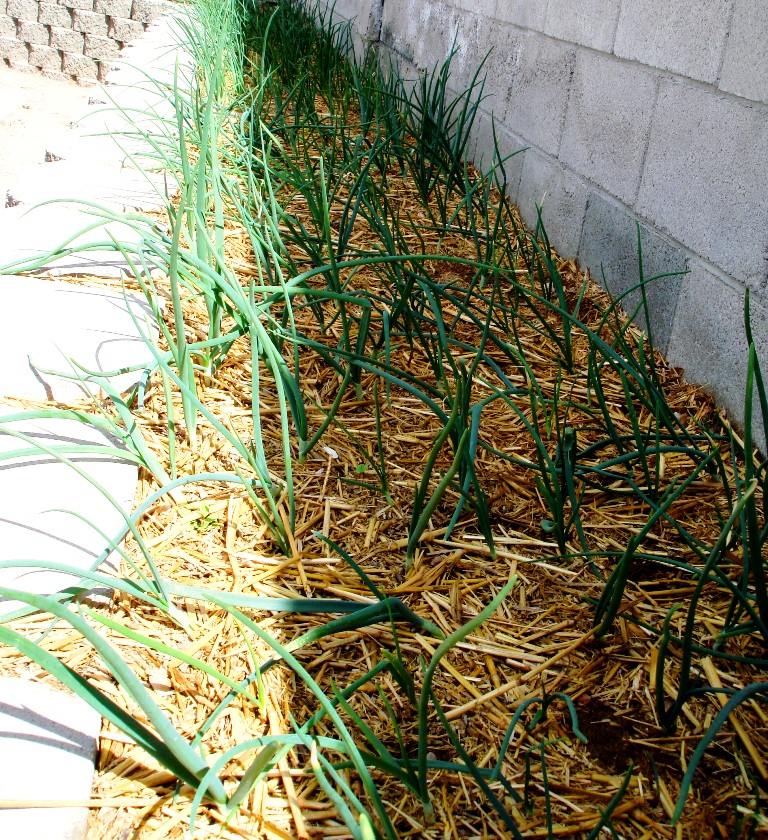 |
| These are onions that I grew, spaced at 9 per square foot. |
I have been using a square measure with plants evenly spaced along both the length and width of the growing bed. I've recently discovered (see, I'm learning, too!) that if I stagger the rows, I can plant even closer. I'll do a post on that later.
I do grow in raised beds into which I have put my soil. These are permanent structures that we built when we reclaimed a huge berm in my back yard. When we bought the house, the back wall had a ginormous earth berm gowing up to the base of the block wall. It was over twelve feet high and extended into the yard about 20 feet. The lot behind me is 18 feet higher than my lot and rather than have sloping yards, the developer built berms. We, my family and friends, cut this back to 12-feet out from the wall and raised it in 3-foot lifts so I have three, 3-foot by 75-foot terraces that are my garden. Since the native "soil" is nothing more than rock, we hauled out dozens of truckloads of rock and hauled in dozens of yards of "soil." This soil was about a 50/50 split of sand and "organic material," mostly rice hulls. Still crappy, but if you put enough compost into it, you can get stuff to grow.
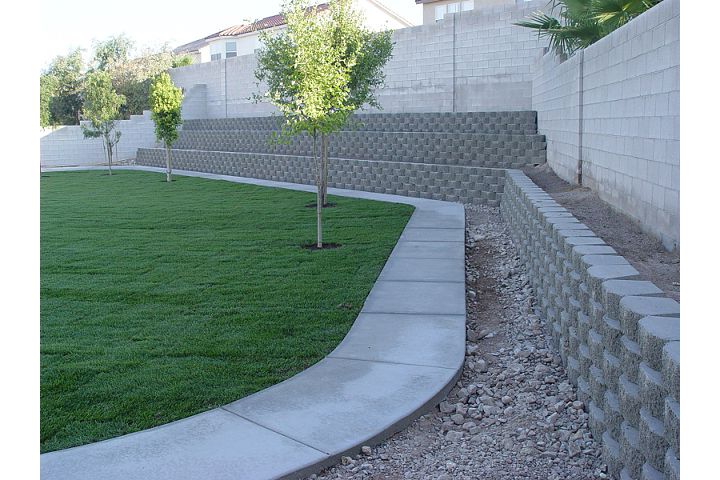 |
| My grow beds, way back in the day. The back wall is 14 feet above the top grow bed. The three on the back are about 75-feet long and 3-feet wide. The one on the side is 2-feet wide and also has 75 feet of growing space. The trees are 10 years older and much larger now. |
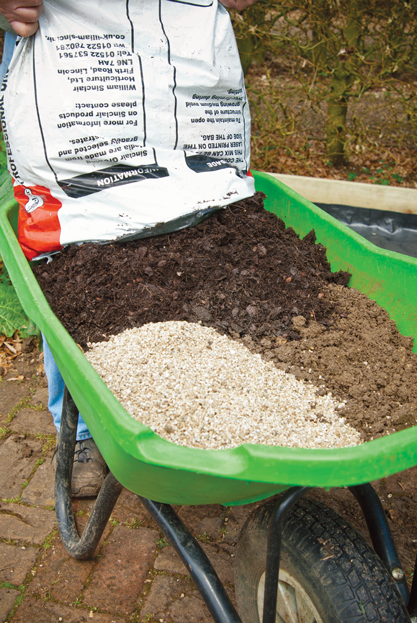 |
| This is a photo from Square Foot Gardening.org's website showing the 1/3 compost 1/3 peat moss and 1/3 vermiculite mix that is Mel's mix. |
Third, Mel recommends placing a grid of plastic or wood or string in the garden dividing the growing area into 1-foot-square planting spaces. I look at that as a waste of time and materials and a colossal hassle. It might work for some, but it doesn't work for me.
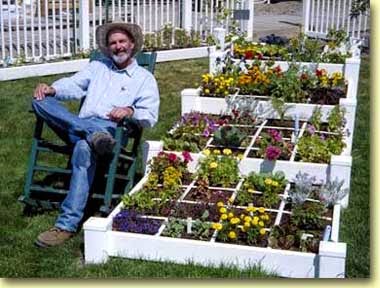 |
| Another photo from their website. This shows a beautiful set of 4x4-foot grow beds with a white plastic lattice-work at 12-inch spacing. Makes a pretty picture, but gets in my way.Your experience may differ. |
I have built and used a 3-foot square frame with 9, 1-foot squares outlined in heavy cord. I use that tool to help me plant my beds but I don't leave it there. If I put seedlings or transplants in, I know where the squares are and if I plant seeds, I will know soon enough. A permanent grid doesn't make sense to me, especially after the first planting.
So, am I a square-foot gardener? I guess the best answer is, "Sort of."
Now the next question is, "Am I a Back-to-Eden gardener?"
Subscribe to:
Posts (Atom)
Popular Posts
-
 On a recent trip to my local dollar store, I came across these buckets. They cost, you guessed it, a dollar each. Now, they’re not too heavy...
 -
 I have had folks ask me questions about the sub-irrigation buckets that I am using to grow my tomatoes and some other vegetables and I have ...
 -
 When last we left you, our hero was considering... Screech!! Oops, sorry. I forgot this wasn't a melodrama. It's a gardening blog. ...
 -
I noticed last night as I was looking over my tomatoes planted in buckets that the first blossom of the season had opened. The delicate pale...